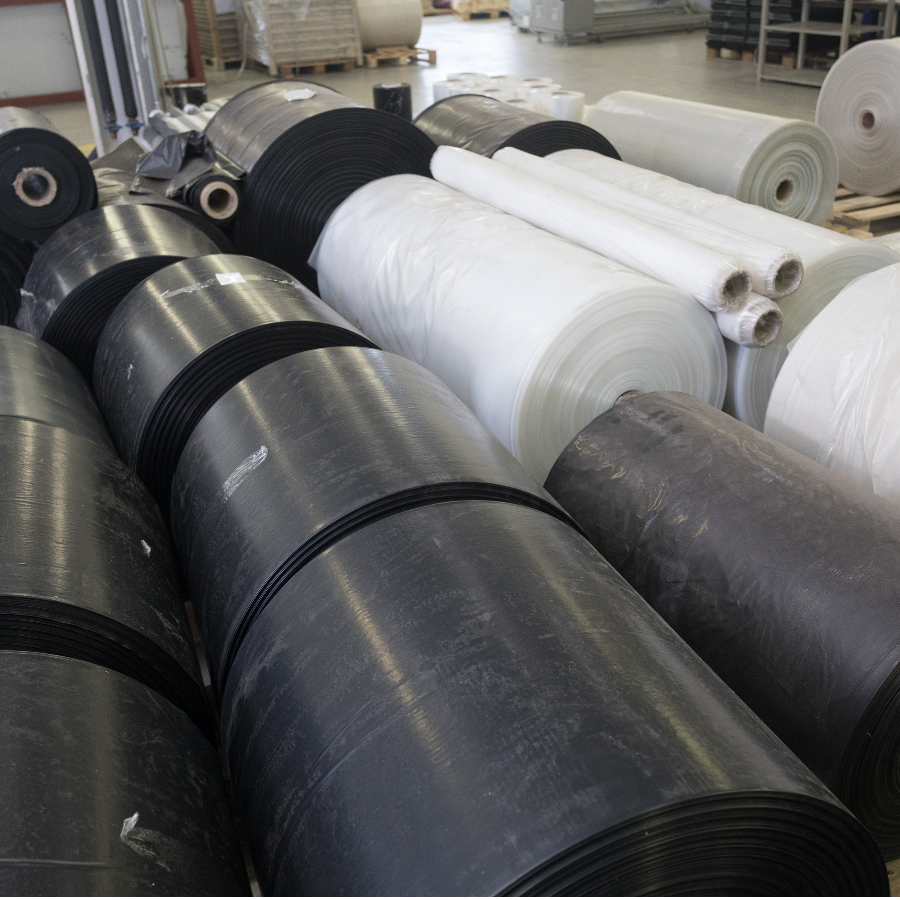
Automatic packaging machines require film whose dimensions, thickness, surface properties, sealability and roll configuration are suited to the equipment and the product being packaged. The raw material and nominal film thickness alone do not determine how the film will perform on a packaging line.
A deviation that can be easily corrected during manual packaging may cause repeated jams, faulty sealing or packaging rejects on an automatic machine. In such cases, the operator resets the machine, sets aside the faulty packages and, if necessary, reduces the speed. These additional costs must be considered alongside the purchase price of the film.
Selecting the right film for an automatic packaging machine requires close cooperation between procurement and production teams.
This guide focuses on selecting LDPE and other polyethylene-based industrial packaging films, covering the key parameters to consider, how to conduct trials, and how to compare supplier quotations.
What makes film suitable for automatic packaging?
The automatic packaging machine unwinds the film in a specific manner, feeds it through the machine, forms it into the required shape, cuts it or seals it. In some processes, the packaging is then heat-shrunk.
The type of film required depends on the process design. Options may include, for example, flat film, half-sleeve or sleeve, as well as designs specifically intended for shrink-wrapping.
The term ‘machine-grade packaging film’ can therefore refer to a wide range of products. Machines designed for LDPE may require different film specifications than machines designed for other materials.
The starting point is always the machine’s documentation and the specific packaging task:
- what product is being packaged;
- how the film is fed into the machine;
- how the closing is carried out;
- what operating speed must be achieved;
- what level of protection the finished packaging must provide.
Manitox offers a range of industrial packaging films , including flat films, half-sleeves, sleeves, shrink films, as well as mono- and co-extruded options. The right film type depends on your packaging needs.
Why is it important to coordinate film production with the settings of the packaging machine?
The manufacturer determines the properties of the film, while the customer processes it on the packaging machine. The two processes are closely interlinked.
When purchasing, it is therefore useful to distinguish between the specifications of the film supplied and the machine settings approved for processing. This makes it easier to identify what needs to be checked if a problem arises later.
| Parameter | What should the agreement cover? |
|---|---|
| Film design | Flat film, half-sleeve or sleeve; is shrinkage required? |
| Width | Nominal size, method of measurement and permitted tolerance |
| Thickness | Nominal value, acceptable deviation and method of verification |
| Surface properties | Requirements regarding slip resistance and ease of opening |
| Weldability | The operating range specified for the machine |
| Roll specifications | Reel diameter, outer diameter, weight and unwinding direction |
| Raw material | Composition, recycled content and functional requirements |
| Traceability and identification | Product code, production batch and approved specification version |
This list can be used both for requesting quotations and for carrying out acceptance checks. The acceptable limits should be agreed upon by the manufacturer and the machine operator.
Why do film width tolerances matter?
When agreeing on the film width, make sure the measurement is clearly defined. For a sleeve, the laid-flat width and the unfolded circumference are different measurements.
The description „800-millimetre film” is therefore not necessarily sufficient on its own to place an order. The drawing, the sample and the dimensions together provide a clear specification.
As a buyer, it is worth asking for answers to three questions:
- What is the nominal size?
- What tolerance does the packaging machine accept?
- How is this checked on the delivered goods?
It is recommended to link the approved dimensional drawing to future orders as well. This ensures that repeat purchases can refer to the same technical specifications.
Film thickness: consistency matters
In automated processing, the thickness consistency of the film is also important. As well as the average value, it is also worth knowing how uniform the thickness is across the width and length of the film.
In film manufacturing technologies, particular attention is therefore paid to thickness control and a uniform film profile. These factors also affect the quality of the roll and its subsequent processability. Davis-Standard – film manufacturing technologies
We recommend treating the reduction of thickness as a separate development step. First, it is necessary to determine which properties need to be retained, and then to test the new version both on the packaging machine and during actual use.
Our related guide: What thickness of LDPE film should we choose for industrial use?
Slip resistance and easy opening: why is the surface of the film important?
What do the slip properties of the film mean?
The film moves both on its own surface and on the machine’s components. The required level of slip is measured, among other things, by the coefficient of friction (COF).
Slip-modifying additives can help to control this behaviour. The additive must be selected to suit the intended processing: with some solutions, the surface effect develops over time following manufacture. For this reason, it is also advisable to coordinate the test conditions for freshly produced film and film processed at a later stage. Ampacet – anti-caking additives
The aim is to ensure reliable, consistent machine performance. It is best to check with the supplier which surfaces the slip properties apply to and under what conditions.
What is adhesion, or ‘blocking’?
We call it ‘blocking’ when film layers stick together, making them harder to separate.
This may be particularly important in operations where the machine has to open the film. Anti-blocking additives can help improve handling by reducing direct contact between the film surfaces. Ampacet – anti-blocking additives
When sampling, it is therefore advisable to observe the entire feeding and opening process. Being able to open the film by hand is a useful initial check, but it is the operational trial that demonstrates how it performs in machinery.
Weldability: what makes a packaging seal reliable?
The quality of the weld is determined by a combination of the material and the technology used. Key factors include the welding temperature, contact time and pressure. The appropriate range must be determined for the specific film and equipment. MULTIVAC – the role of process parameters
During testing, we recommend checking the locking mechanism under different operating conditions:
- at the intended operating speed;
- during start-up and restart;
- with the actual weight of the packaged product;
- when cold and during subsequent handling.
What does ‘hot tack’ mean?
‘Hot tack’ refers to the strength of a weld that has just been completed and is still warm. This is particularly important if the joint is subjected to a load shortly after welding.
The composition of the raw materials can influence the formation of welds, the strength measured in the hot state and the final tensile strength. Manufacturers of raw materials for the packaging industry therefore treat these as separate performance characteristics. Dow – welding properties
Based on a brief test, it is therefore worth assessing how the finished package performs: whether it holds the product securely, whether the seal is adequate, and how it withstands further handling.
Winding: the packaging machine processes a whole roll
When inspecting the film, it is easy to focus solely on the sample piece. However, the machine’s operation is also influenced by the design of the roll and the method of unwinding.
Tensioning and guiding the film web, and coordinating the individual machine sections, are important for stable processing. With thinner materials, these aspects may require particular attention. Davis-Standard – considerations for film track management
It is worth specifying the following when requesting a quotation:
- the core diameter required by the machine;
- the maximum roll diameter and weight;
- the unwinding direction;
- the print position on printed film;
- the required roll length or net weight;
- the permitted number of breaks and how they should be marked.
During the test, we recommend monitoring how the roll unwinds and how its diameter changes. This will reveal whether the operating conditions accepted at the start are maintained throughout the entire processing cycle.
Can recycled LDPE film be used in an automatic packaging machine?
In certain applications, yes, but suitability must be verified for the specific film and packaging process. As well as the percentage of recycled content, the quality of the raw material and the properties of the finished film are also important.
The composition and level of contamination of the recycled raw materials may vary, which can pose a challenge in film production. The required quality of the raw materials must therefore be adjusted to the requirements of the finished product. Reifenhäuser – processing of recycled raw materials
Should you choose PCR or PIR raw material?
It is best to specify separately whether post-consumer (PCR) or post-industrial (PIR) recycled materials are required.
However, in addition to the origin, the specific composition of the recycled material must also be examined. For example, the processing of industrial film waste that is printed, treated with adhesive or contains multiple types of material may present a particular challenge. Reifenhäuser – recycled materials of industrial origin
For the purchaser, the key point is that the chosen variant consistently meets the approved requirements. To assess this, sampling, documented machine testing and the inspection of subsequent deliveries may also be required.
For more information on these concepts: PCR and PIR raw materials: what is the difference in the production of recycled film?
How to test a new packaging film on a machine
The following test sequence can help when changing suppliers or developing a new film. The specific tests should be tailored to the intended application.
1. Record the current situation
Before testing, record the current film, machine settings, operating speed and typical faults.
It is useful to have a short data sheet on which the operator can record the same details for both the old and the new material.
2. Set out the conditions for approval in advance
It is worth deciding on the criteria for accepting the film. Such criteria might include the quality of the seal, the required performance, the maximum number of defects, or the appearance of the finished package.
Predefined criteria help ensure consistent evaluation throughout the test.
3. Use a clearly identified sample
Each test roll must have a unique product identifier and production batch number. Please also specify what changes are being tested: a new raw material, a reduced thickness, a different additive composition or a different roll design.
4. Document the changes
It helps with troubleshooting if you make a note of the changes you have made and the results you observe afterwards.
Changing several parameters at once makes it harder to identify the cause of any differences. The person conducting the experiment should therefore plan the order in which the changes are made.
5. Check the finished goods
It is worth checking the products even after they have left the packaging machine. It may also be necessary to examine aspects such as sealing, handling, storage and transport.
6. Prepare an approved specification
Assign the results of the successful test to a specific film variant. Record the product parameters, the approved machine settings and the inspection requirements.
This will serve as the common reference point for repeat orders.
How can we compare the actual costs of packaging films?
When purchasing, we suggest calculating the cost per suitable package. In addition to the use of the film, the associated production losses can also be taken into account.
The following hypothetical examplecompares the two options, assuming that 1,000 parcels are successfully packaged in each case.
| Cost item | Film A | Film B |
|---|---|---|
| Total cost of film material used | 30,000 Ft | 32,000 Ft |
| Additional labour costs for repackaging | 4,000 Ft | 1,500 Ft |
| Cost attributed to packaging downtime | 6,000 Ft | 2,000 Ft |
| Total costs considered | 40,000 Ft | 35,500 Ft |
| Cost per successfully packaged parcel | 40 Ft | 35.50 Ft |
In this example, the version with the higher film material cost gives a more favourable result overall.
When carrying out your own calculations, it is important to compare the same period and the same quality requirements. There should be no overlap between cost items: the same loss should only be accounted for once.
Basis for the calculation:
The cost of a single parcel = the total of the packaging costs examined / the number of parcels accepted.
What information is needed for a machine-wrapping film quotation?
A detailed inquiry makes the manufacturer’s job easier and results in more comparable quotations.
It is useful to have the following information to hand:
- Description of the packaged product: size, weight, surface area and protection requirements.
- Specifications of the packaging machine: manufacturer, model and technology used.
- The design of the film: flat film, half-sleeve, sleeve or other designs.
- The required dimensions: with a diagram and a clarification of the dimensions.
- Specifications of the current film: thickness, raw material and available specifications.
- Current operation: speed achieved, settings and recurring faults.
- Requirements for the roll: length, diameter, weight and winding direction.
- The demand for recycled content: required ratio and documentation.
- Printing and layout requirements: where relevant.
- Planned quantity: sampling requirements, order volume and usage schedule.
If any of the details are not yet known, it is advisable to indicate this as well. A sample item, a few well-chosen photographs and a precise description of the fault can serve as a useful starting point for professional consultation.
A template for an inquiry
We are looking for industrial packaging film for an automatic packaging machine.
Packaged product: …
Manufacturer and model of the packaging machine: …
Layout and dimensions: …
Current thickness and material: …
Reel and core specifications: …
Current operating speed: …
Problem encountered or development objective: …
Requirements regarding recycled content: …
Planned quantity and sampling requirements: …
Enclosed drawing, specification or sample: …
How can Manitox help you choose the right packaging film?
Manitox offers bespoke packaging design and manufacturing services. The intended use and the required packaging parameters form the basis for the consultation.
The product range includes various types of industrial film, so the first step is to determine which solution is best suited to the specific product and technology.
During the technical consultation, we suggest presenting the current packaging, the machine’s requirements and the development objective. This may involve reducing material use, developing a new film structure or assessing the suitability of recycled materials.
Manitox’s services include product testing carried out in its own film laboratory and advice on film thickness. The scope of the tests required for a particular task can be specified during the consultation.
Frequently asked questions about films for automatic packaging machines
What type of film can be used in an automatic packaging machine?
The film must be suitable for the machine and its packaging process. LDPE and other polyethylene films may be suitable, provided the machine is designed to process them and the film meets the required specifications.
Is it sufficient to specify the width and thickness of the film when placing an order?
Further data may be required to ensure an accurate selection. This includes dimensional tolerances, film design, roll specifications, welding requirements and the intended operational conditions.
Why does the film get stuck in the packaging machine?
There may be several possible causes, so we suggest investigating the fault systematically. Checking the film, the roll, the machine settings and the condition of the equipment can, taken together, help to identify the cause.
Why are the slip properties of the film important?
Surface friction affects the movement and handling of the film. The appropriate slip characteristics must be determined for the specific machine and task.
What does ‘blocking the film’ mean?
Blocking occurs when the contact foil layers stick together. This can make it difficult to separate the layers and may affect the automatic opening process.
What does ‘hot tack’ mean in welding?
The strength of a fresh, still-warm weld. This is particularly important if the seal on the packaging is subjected to a load shortly after it has been made.
Can recycled raw materials be used for machine-wrapping film?
For certain applications, yes. Suitability must be assessed on the basis of the requirements of the raw material, the finished film and the packaging process, following appropriate testing.
Is it possible to switch to a thinner film on the same machine?
This can be investigated, but the change should be approved with a trial. Processability, weldability and the performance of the finished packaging must also be checked.
Why does the design of the roll matter?
The packaging machine is capable of accepting and processing rolls of a specific size, weight and design. It is advisable to record this information together with the material parameters.
What information should you provide when contacting a film manufacturer?
Describe the product and packaging machine, specify the current film and roll requirements, state the expected order quantity and clearly explain what you want to achieve.
Are you looking for wrapping film for an automatic machine? Get in touch with the experts at Manitox!
Are you planning a new packaging project, looking for a supplier, or considering a change to your current industrial film?
Please send us the details of the packaged product, the machine type, the current film specifications and the development objective. Based on this information, we can begin technical discussions to find a film solution suited to the task.
Take a look our industrial packaging materials, or Request a bespoke quote from the Manitox team!